
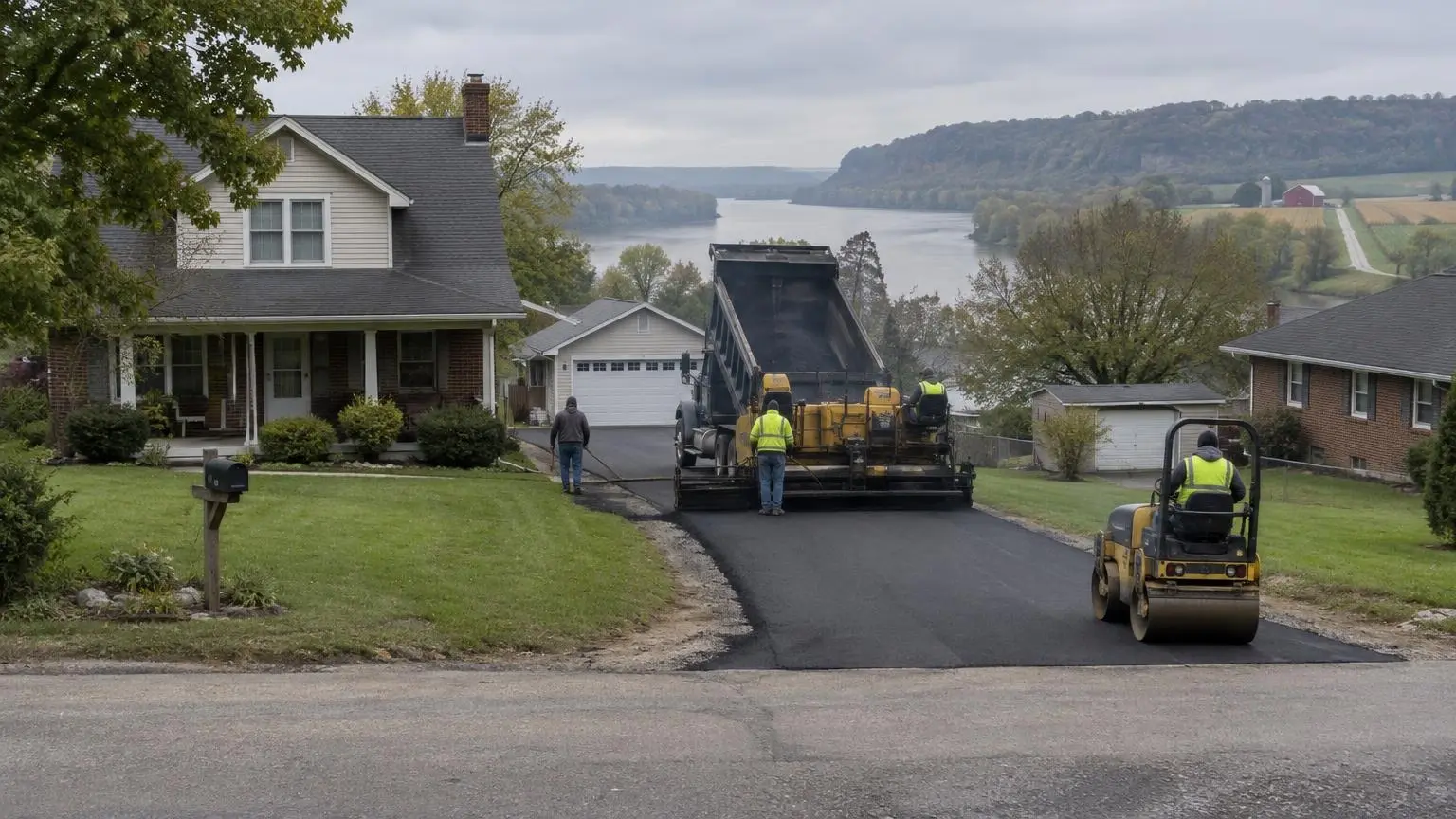
Protect sound asphalt
Sealcoating in Terre Haute, IN
A protective layer that slows sun and water damage, applied to clean, repaired pavement.
- No-cost site visits and written quotes
- Every line item priced separately
- Drainage and soil checked before paving
Slowing the Clock on Asphalt
Sealcoating is a thin protective layer applied over asphalt pavement. The binder in asphalt slowly oxidizes in sun and air; the surface fades to gray, small stones loosen, and water starts getting into the top layer. A sealer slows that oxidation and keeps water out. It is not a structural repair, and it will not hold up a weak base, so it belongs on pavement that is still in good shape.
What Wabash Valley weather does
Hot, humid summers soften and age the surface, and winters that swing across freezing pry open any crack that holds water. A surface kept sealed, with its cracks filled, holds out more water before freeze season and ages more slowly in summer.
Timing
HomeGuide recommends waiting 3 to 6 months after new paving before the first coat, then resealing every 2 to 10 years depending on the product and conditions; HomeAdvisor suggests every 2 to 5 years for parking lots. Look at the color: when it has gone gray and the stone is showing, it is time. Sealing every year builds up a film that can crack and flake.
Weather window
Sealer needs dry pavement and moderate temperatures. HomeGuide's working range is 50 to 95 degrees, with walking possible after 1 to 3 hours and driving after 12 to 72. In Terre Haute that usually means May through early October, with a close eye on summer thunderstorms.
Preparation
- Blowing and sweeping the surface and edges
- Scraping and priming oil and fuel stains
- Filling cracks before sealing
- Cutting in by hand along garage slabs, walks and curbs
- Blocking traffic until cured
Most peeling seal jobs come from skipped prep.
Sealer choices
HomeGuide notes that refined coal tar sealers resist fuel stains but have been banned in many areas over health and environmental concerns, while asphalt emulsion sealers are considered the more environmentally friendly option. We tell you which we plan to use.
Rentals and commercial lots
For multi-unit properties and lots, we seal in sections so residents and customers keep access, and restripe once the sealer cures.
How much sealer
HomeGuide notes that a 5-gallon container covers about 250 to 500 square feet, depending on the product. Two thin coats generally wear better than one thick one, especially on lots.
After sealing
Keep cars off for the full cure time, avoid turning wheels in place for a few days, and keep sprinklers off the surface until it has set.
Signs it is time
- The surface has faded from black to gray
- Small stones are showing or coming loose
- Water darkens the surface and soaks in rather than beading
- Fine cracks are appearing across the surface
What sealcoating will not fix
Potholes, sunken areas and wide cracks need repair before sealing. Sealer over a failing base only hides the problem for a few months.
What This Covers
Clean, repair, then seal.
Cleaning
Debris, dirt and grass removed so sealer bonds.
Stain priming
Oil and fuel spots treated so sealer holds.
Crack filling
Cracks filled first so they are sealed, not painted over.
Application
Squeegee or spray, with hand-finished edges.
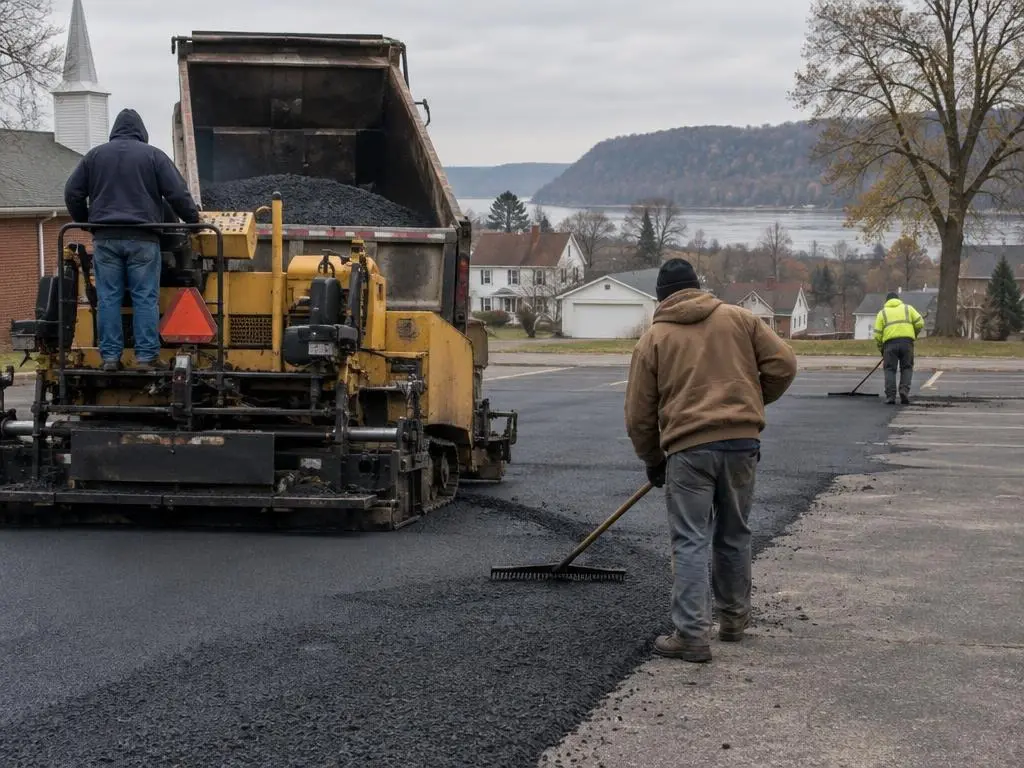
Typical Sealcoating Costs
| Item | Published range |
|---|---|
| Driveway sealcoating (HomeGuide) | $1 to $2 per sq ft |
| Two-car driveway, 20 x 20 ft (HomeGuide) | $400 to $800 |
| Three-car driveway, 24 x 36 ft (HomeGuide) | $860 to $1,700 |
| National average job (HomeGuide) | About $600 |
| Parking lot sealcoating (HomeAdvisor) | $0.15 to $0.30 per sq ft |
National ranges from HomeGuide and HomeAdvisor. Crack filling, patching and restriping are separate. Your written quote is your price.
How It Works
1. Look
We confirm the pavement is sound enough to seal.
2. Prep
Clean, prime stains, fill cracks.
3. Seal
Sealer applied in suitable weather.
4. Cure
Traffic held off until it is ready.
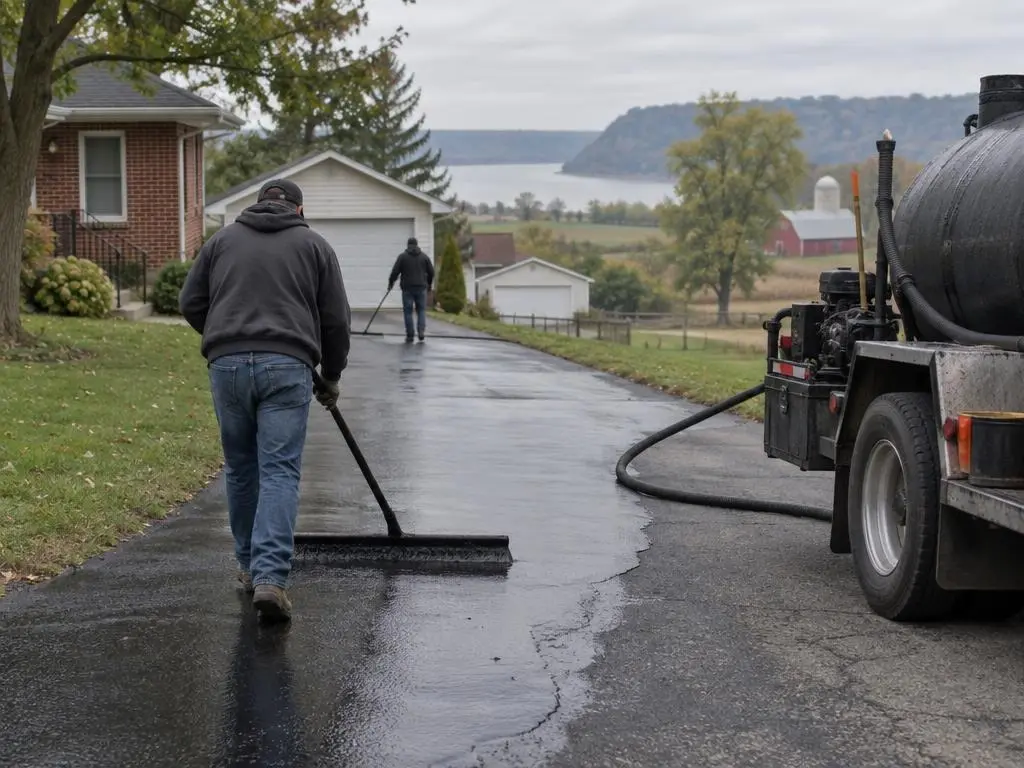
Sealcoating Questions
How often should I sealcoat?
HomeGuide says every 2 to 10 years for driveways; HomeAdvisor says every 2 to 5 for lots. Reseal when the surface fades to gray.
Can I seal a brand-new driveway?
Wait 3 to 6 months so the asphalt can cure first.
How soon can I drive on it?
Usually 12 to 72 hours, depending on heat, humidity and shade. Foot traffic is often fine after 1 to 3 hours.
Does sealer fix cracks?
No. Cracks are filled first; sealer is too thin to fill them.
Do you seal parking lots too?
Yes. Lots are usually sprayed in sections so part stays open, then restriped after the sealer cures.
Sealcoating Service Areas
- Asphalt Paving in Terre Haute, IN
- Asphalt Paving in West Terre Haute, IN
- Asphalt Paving in Seelyville, IN
- Asphalt Paving in Riley, IN
- Asphalt Paving in Saint Mary-of-the-Woods, IN
- Asphalt Paving in Prairie Creek, IN
- Asphalt Paving in Brazil, IN
- Asphalt Paving in Clay City, IN
- Asphalt Paving in Staunton, IN
- Asphalt Paving in Clinton, IN
- Asphalt Paving in Cayuga, IN
- Asphalt Paving in Rockville, IN
- Asphalt Paving in Rosedale, IN
- Asphalt Paving in Montezuma, IN
- Asphalt Paving in Sullivan, IN
- Asphalt Paving in Shelburn, IN
- Asphalt Paving in Farmersburg, IN
- Asphalt Paving in Dugger, IN
- Asphalt Paving in Linton, IN
- Asphalt Paving in Greencastle, IN
- Asphalt Paving in Marshall, IL
- Asphalt Paving in Paris, IL
Get a Sealcoating Estimate
Free sealcoating quotes in Terre Haute and nearby towns.